Foodzone includes several Australian and New Zealand food composition databases. Each profile has its own food database, and it drives that profile's diary and reports.
Which one to pick
- Tracking your own food, or counselling clients — Australia. It has the brand foods and everyday serves people actually log.
- Research, or teaching that must cite a published dataset — a government database, usually AUSNUT 2023. See Choose a database for a study.
- Continuing older work — stay on the legacy database it started on, so its numbers don't change.
Change a profile's database
- From the profile's diary, select Profile in the header.
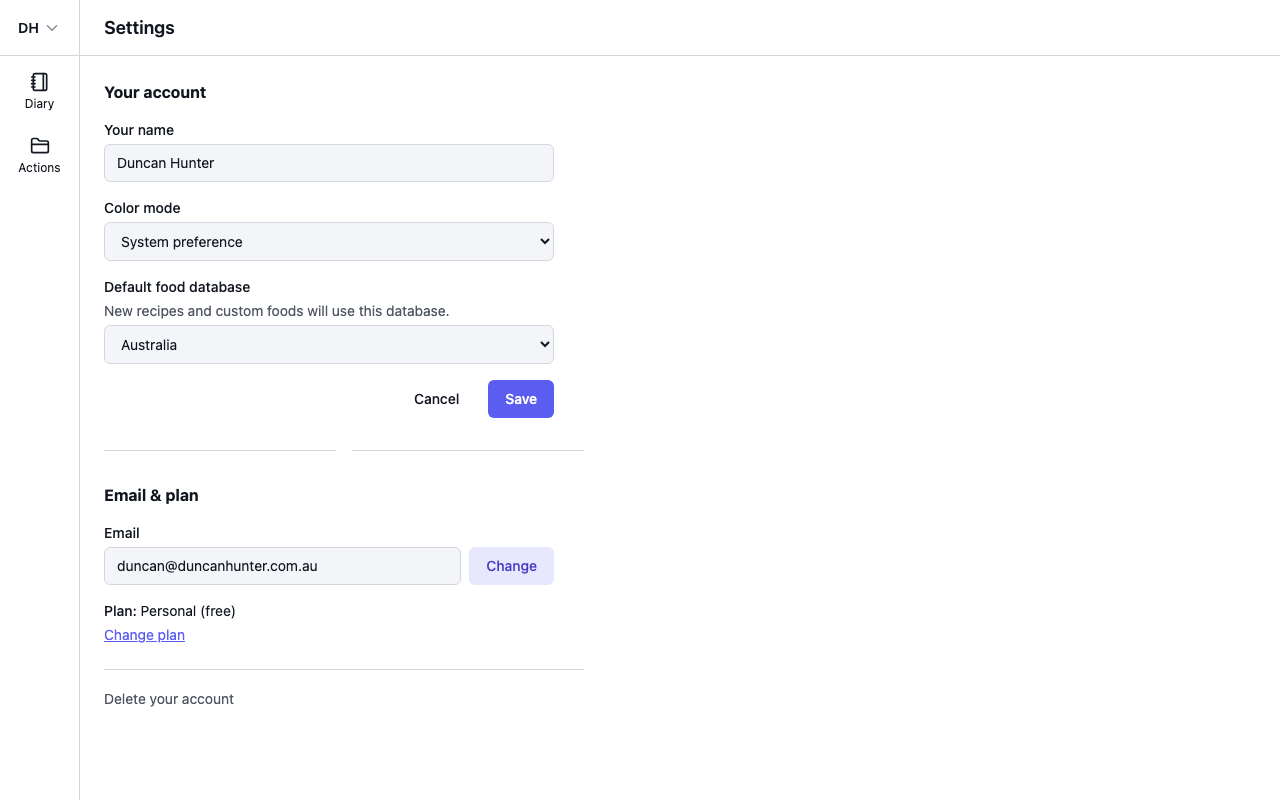
- Under Preferences, select the Food database row and pick a database in the dialog that opens:
- Recommended — Australia. Builds on the official data with added brand foods and everyday serving measures, so it works like a familiar food tracker. The best choice for day-to-day tracking.
- Government databases — AUSNUT 2023, FoodFiles 2024, Australian Food Composition v3. The official datasets, unchanged, with the complete technical nutrient values — suited to research and academic use.
- Show legacy databases — earlier releases, including Australia (legacy), kept so older data keeps its original values.
- Select Done, then Save.
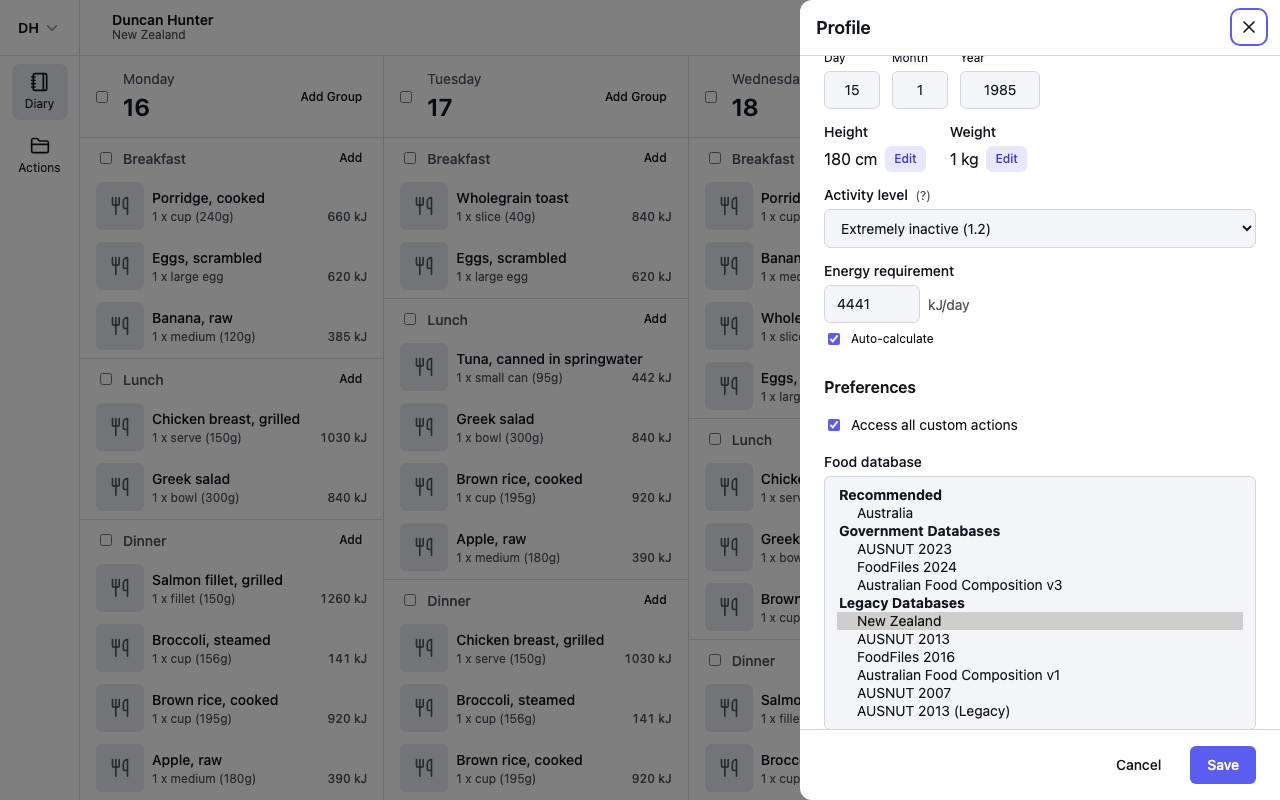
The default in Settings
Settings also has a Default food database (for your account, or set per team on a Team plan, where only the owner and admins can change it). New accounts start on Australia. It is only a default: new recipes and custom foods use it, and new assessments start on it. Changing it never changes existing profiles — each profile's own setting applies. Default energy units sits under it: actions and new assessments use them, and each person's diary keeps its own setting.